There is no single price, because a temporary fire alarm is hired by the unit and by the week. A supermarket refit that needed one trolley for seven weeks and a cladding job that needed twenty linked points for 34 weeks were quoted the same way, and the difference between them is mostly arithmetic.
We quote every hire on request rather than publishing a rate card, so this is not a price list. It explains what goes into the weekly figure, what should already be inside it, and where the avoidable costs sit, so that two quotes can be compared on the same terms.
The short answer
- Hire is priced per unit, per week. Multiply the units by the weeks and you have the size of the hire, which we call unit-weeks.
- The weekly price moves with the number of units, whether they are standalone or radio linked, and how long the hire runs.
- Delivery, installation, on-site servicing and collection belong inside the price. If a quote lists them separately, add them back before you compare.
- Check the minimum hire period. Four weeks is common; ours is one week, then weekly.
- The biggest saving is the right count. Too many units cost money every week, and too few cost more when an inspector finds the gap.
How is temporary fire alarm hire priced?
Per unit, per week. Each fire point or alarm unit on the site has a weekly rate, and the hire runs from delivery to collection. The two numbers multiply, so the honest measure of a hire's size is unit-weeks: the number of units times the number of weeks they are on site.
Our five most recent jobs show how far apart hires sit. The largest came to 680 unit-weeks and the smallest to 7, so the bigger job was about 97 times the size of the smaller one. A single headline price would have been wrong for both.
| Job | Equipment | Hire length | Unit-weeks |
|---|---|---|---|
| Colchester, cladding | 20 radio linked fire alarm points | 34 weeks | 680 |
| Gloucester, refit | 5 radio linked fire alarm trolleys | 11 weeks | 55 |
| Durham, supermarket refit | 1 radio linked fire alarm trolley | 7 weeks | 7 |
| Derby, refit | 3 radio linked fire alarm trolleys | 5 weeks | 15 |
| Newcastle, cladding | 20 radio linked fire alarm points | 26 weeks | 520 |
What makes one hire cost more than another?
Three things set the weekly figure, and a fourth sets the total.
- How many units. The count comes from the floor area and the walking distances on each storey, not from a rule of thumb. HSG168 treats one water or foam and one CO2 extinguisher per 200 m² as reasonable cover, and BS 5306-8 keeps the walk to an extinguisher under 30 metres. We work through it in how many fire points a site needs.
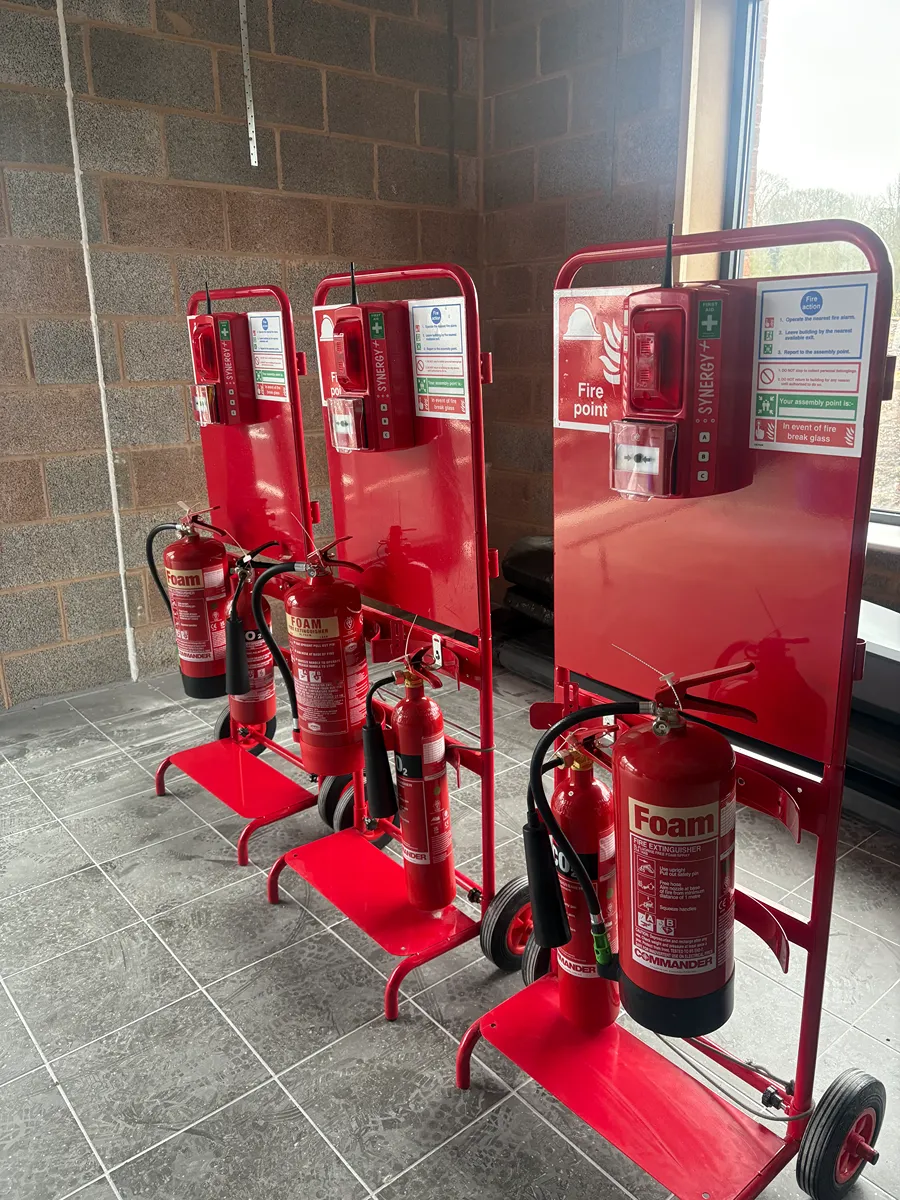
- Standalone or radio linked. A radio linked unit carries a wireless call point and sounder that talk to every other unit on the network, so it does more than a standalone unit and is priced accordingly. Most sites need it anyway, because HSG168 expects an interconnected alarm on all but small, open sites.
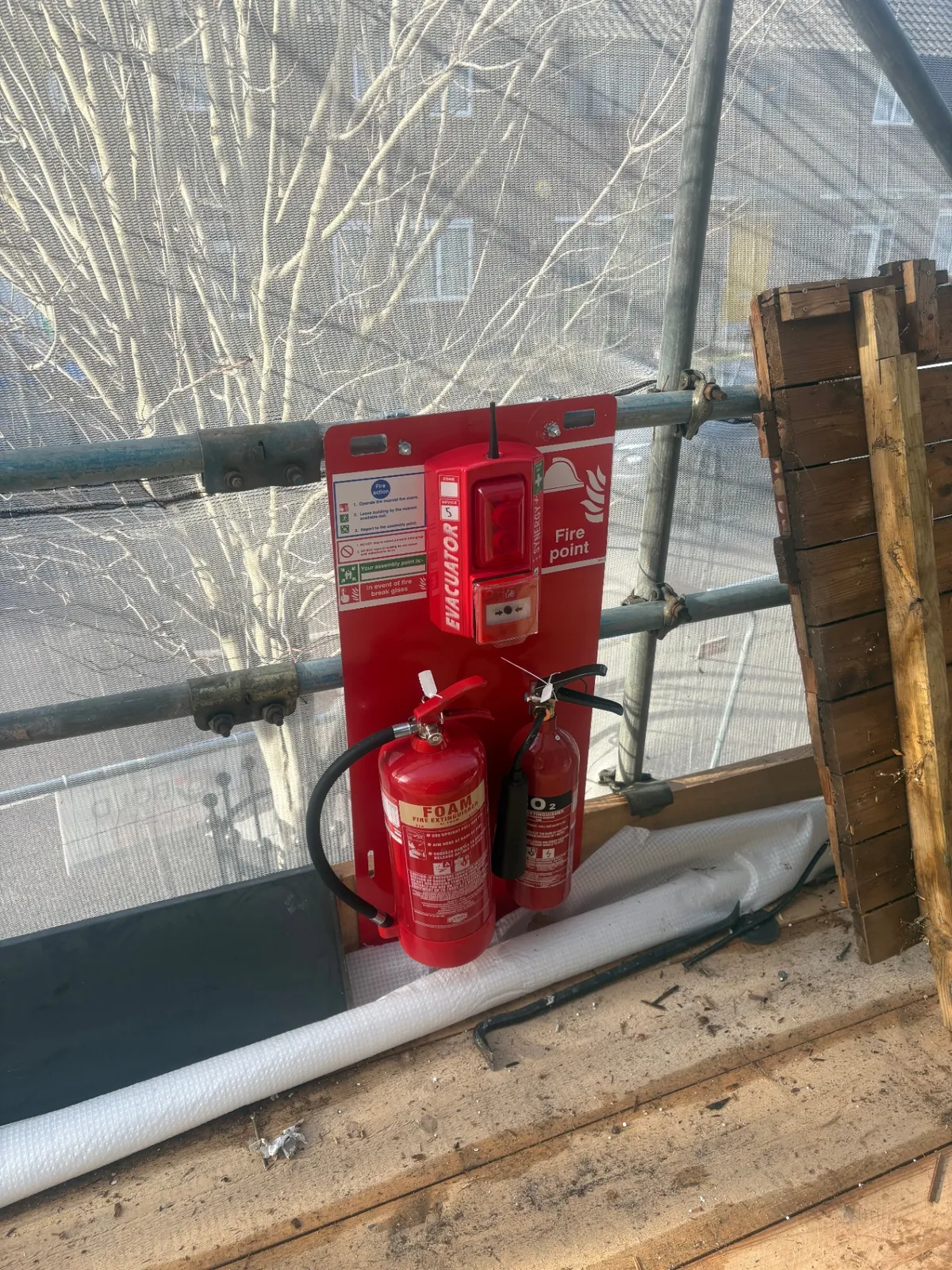
- The equipment on each unit. Every unit we supply carries a foam and a CO2 extinguisher, a break glass call point and fire action signage. Water, dry powder or wet chemical can be swapped in where the fire risk assessment calls for them.
- How long the hire runs. The weekly figure stays the same, but a 34 week hire costs what 34 weeks cost. Ask any supplier whether the weekly rate changes for longer commitments.
What should be included in the weekly price?
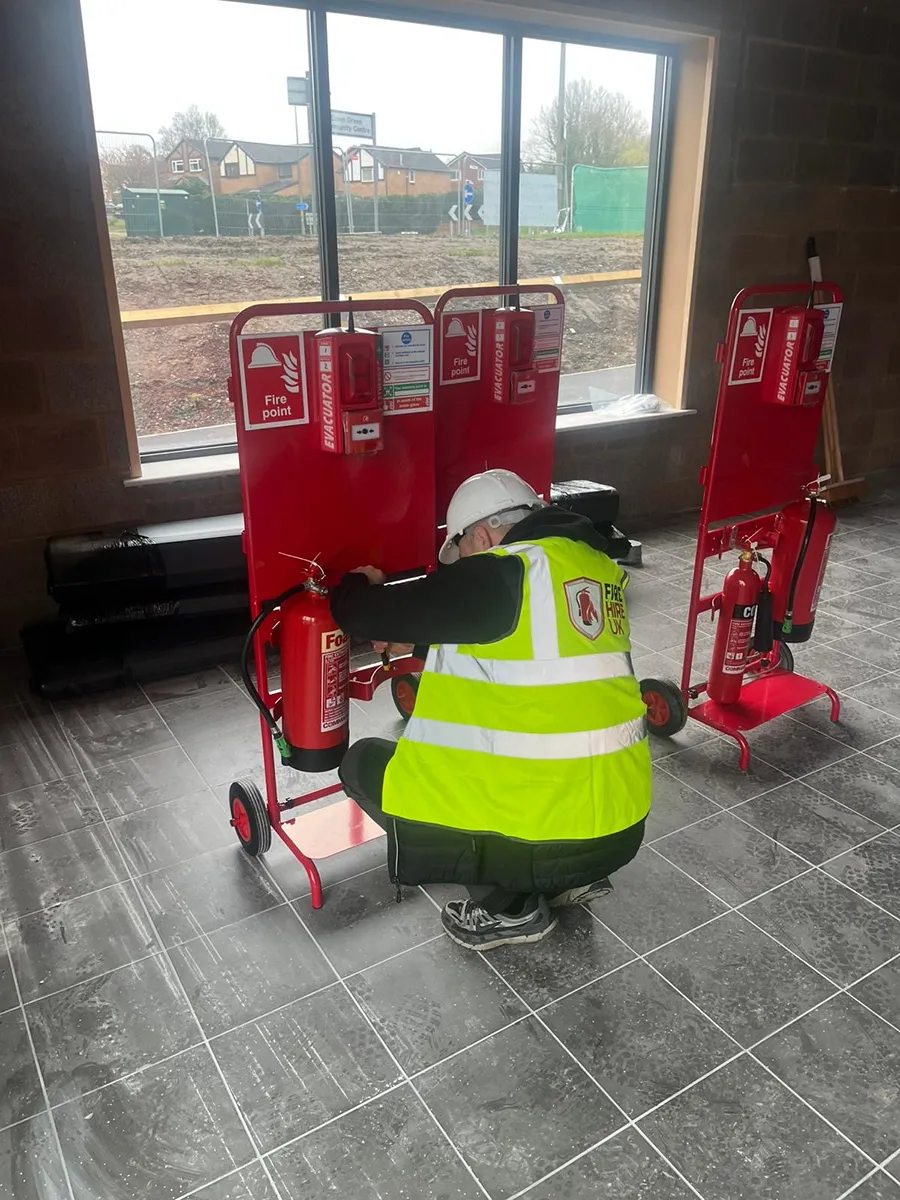
Four services should come with every unit: delivery to site, installation, servicing during the hire and collection at the end. All four are in every Fire Hire UK hire, whether it is one unit or a hundred.
Servicing is the one to check hardest. HSG168 expects extinguishers to be examined at least once a year by a competent person, and an alarm that has stopped working is no alarm at all. A servicing visit that has to be booked and paid for separately is a visit that tends not to happen.
Compare like with like
Before comparing two quotes, write both out as a weekly price per unit with delivery, installation, servicing and collection added back in, and the minimum hire applied to your real programme. Only then is the cheaper one actually cheaper.
Which costs are easy to miss?
- Minimum hire periods. A four week minimum on a two week job means paying for two weeks of equipment you no longer need. Ours is one week, then weekly.
- Changes during the hire. A growing site should be able to add units for the weeks it needs them, and a site that finishes a phase early should be able to send units back. Check that neither restarts a minimum period.
- Used extinguishers. An extinguisher that has been discharged, even partly, has to be recharged or replaced before it counts as cover again. Ask how that is handled and charged.
- Lost or damaged equipment. Units on open sites get moved, knocked and occasionally taken. Ask how loss and damage are charged before the hire starts, not after.
- VAT. Equipment hire is charged at the standard rate of VAT, currently 20%. Check whether each quote is shown before or after VAT, so you are not comparing one with the other.
Is it cheaper to buy a site fire alarm than to hire one?
Rarely, for a single project. Buying adds the cost of servicing, recertifying, storing and eventually replacing the equipment, plus someone to manage it between jobs. Contractors who run several sites back to back can come out ahead over a few years; most cannot. We work through the three year numbers in wireless fire alarm hire vs buying.
How can you keep the cost down without cutting cover?
- Count properly. Use the 200 m² ratio and the 30 metre walk, floor by floor, rather than a round number. A count built that way is the cheapest one that will still stand up to an inspector.
- Hire for the phase you are in. A site at groundworks needs far fewer fire points than the same site at first fix. Add units as floors open up and hand them back as phases finish.
- Use standalone only where it is enough. On a small, open, single level site where one sounder can be heard everywhere, standalone units are a fair saving. Anywhere else the saving is false. Our standalone vs radio linked guide has the one-test check.
- Match the minimum to the job. For short works such as a store refit, a one week minimum means you pay for the weeks you use.
- Look after the units. Keep fire points clear, upright and where they were installed. It keeps the site compliant, and it keeps loss and damage charges off the invoice.
What do we need from you to quote?
The site postcode, a start date, a rough idea of how long the work will run and either a unit count or a floor plan. Tell us whether you want standalone or radio linked units, or ask us to recommend. We aim to reply within one business day with the units we would put on the site and the weekly price.
For a fast answer, send us the site details. If the work is a refit or refurbishment where the building's own alarm will be off, say so, and see temporary fire alarm hire for how that cover works.