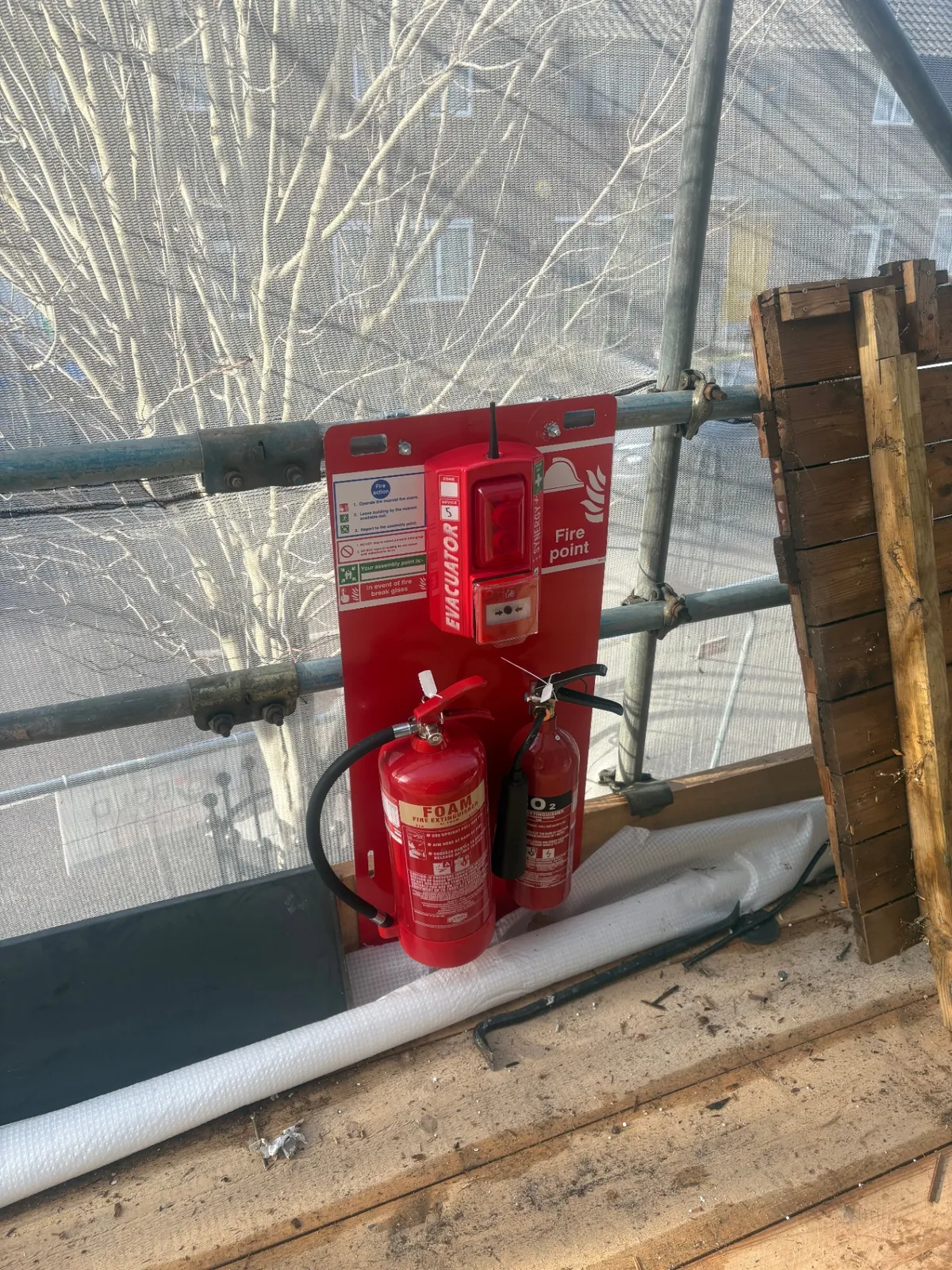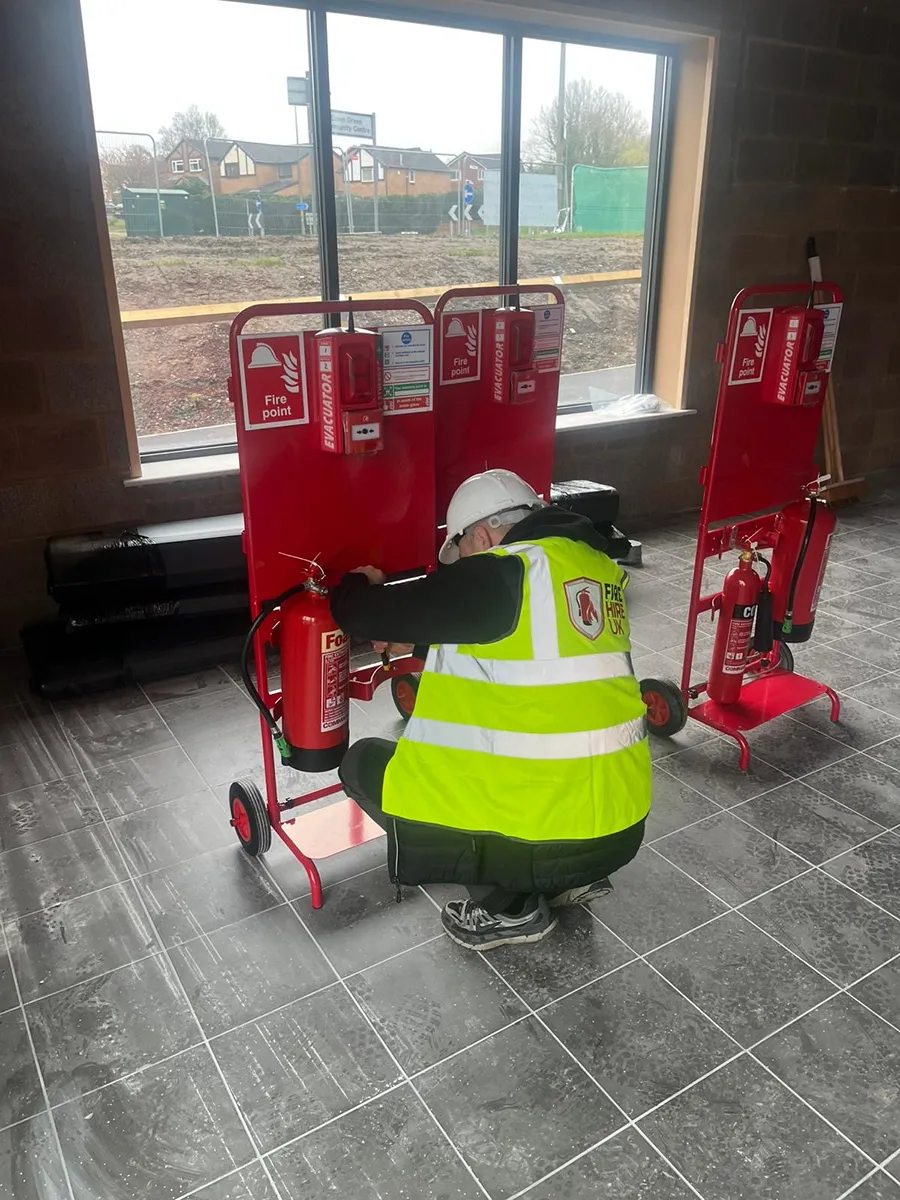
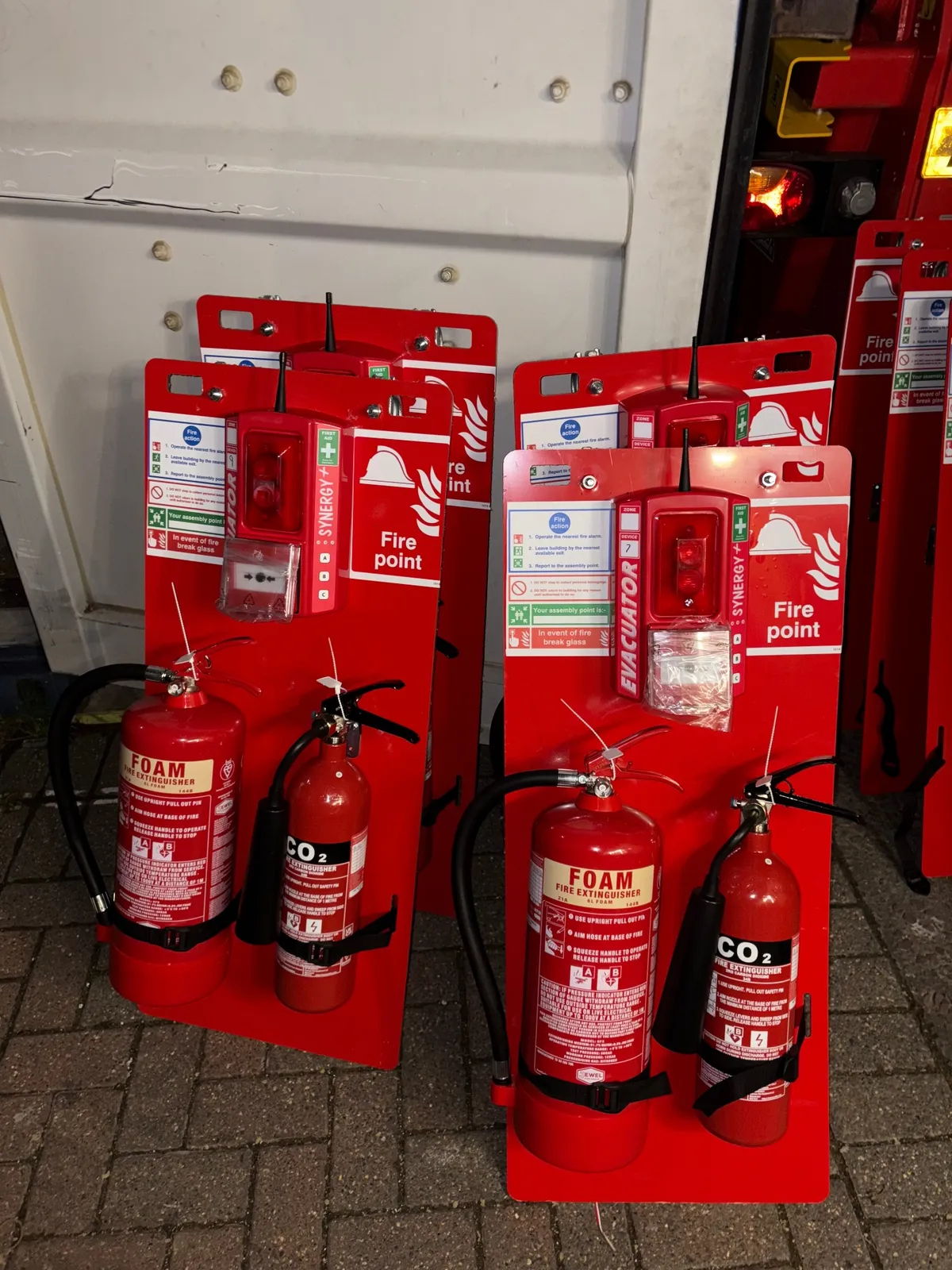
A fire alarm on a construction site has one job. When someone finds a fire, everybody else has to know about it straight away. A standalone unit warns the people who can hear it. A radio linked system warns everyone on the network at once, wherever they are working.
For most sites the HSE's guidance points one way, and a single test on a normal working day settles the question for yours.
The short answer
- A standalone unit sounds only where its call point is pressed. A radio linked unit sounds every unit on the network, and can alert the site office too.
- HSG168 expects most sites to have an interconnected system of call points and sounders, wired or wireless. A self-contained unit is the minimum only on a limited number of open structures or buildings with a few rooms.
- The test that settles it: sound one unit with plant running. If anyone at the furthest work position could not hear it clearly, the site needs linked units.
- Test whichever you choose every week, at the same time, in real working conditions, and keep a record.
- Linked systems grow with the site. New units join the existing network, with no cable to run.
What is the difference between standalone and radio linked fire alarms?
A standalone fire alarm is self-contained. Pressing its call point sets off its own sounder and nothing else. A radio linked system, also sold as a wireless fire alarm, connects its units by radio, so pressing any call point sounds every unit on the network together.
| Standalone | Radio linked (wireless) | |
|---|---|---|
| Pressing a call point sounds | That unit only | Every unit on the network |
| Who gets the warning | People within earshot of that unit | People near any unit on site |
| Cabling | None | None. Units link by radio |
| Site office alert | No | Can be included |
| Adding units mid project | Each is another separate alarm | New units join the same network |
| Weekly hire cost | Lower | Higher per unit |
What does HSG168 expect on a construction site?
HSG168, the HSE's guidance on fire safety in construction, describes a sliding scale. Raising the alarm by word of mouth is only appropriate on very small open-air sites. A small self-contained alarm unit is the minimum on a limited number of sites that are open structures or have only a few rooms. On the majority of sites, it expects an interconnecting system of call points and sounders, wired-in or wireless, that gives an effective warning on that site. The legal duties behind that expectation are in our construction site fire safety guide.
Whatever the system, the warning has to be distinctive, clearly audible above any other noise and recognised by everyone on site. HSG168 also asks you to think about noisy areas, lone workers and anyone whose hearing is affected by the protective equipment they wear.
For higher risk sites, such as timber frame without fire mitigation or high-rise buildings, its summary is blunter: alarms must be interconnected, by protected cable or wireless, so that everyone can hear from one activation. On high-rise work it adds that the alarm has to extend with the building so it can be heard in all areas at all times, and it names radio operated systems as an option.
When is a standalone fire alarm enough?
When one sounder can be heard over normal working noise from every place anyone works. In practice that means a small, open, single level site, such as a short groundworks package or a small single storey refurbishment.
Standalone units cost less each week, and on the right site they do the job well. Their weakness is time. A site that starts small rarely stays small, and a standalone setup that was right at mobilisation can leave a scaffold lift or a second floor without any warning a few months later. If you start standalone, put a date in the programme to test it again.
When does a site need radio linked alarms?
As soon as any one of these is true:
- Two or more storeys, or scaffold lifts, are occupied at the same time.
- The scaffold is wrapped or sheeted, which deadens sound between lifts.
- Work areas, compounds or welfare blocks sit out of earshot of each other.
- Plant noise could mask a single sounder. BS 5839-1 sets the usual benchmark: at least 65 dB(A), or 5 dB(A) above any noise lasting more than 30 seconds.
- The site is higher risk, such as timber frame without fire mitigation or a high-rise, where HSG168 says alarms must be interconnected.
- People work alone, or wear hearing protection for long periods.
How a linked system is laid out across a whole site, and what a hire includes, is on our construction site fire alarms page. Wrapped and sheeted scaffolds get their own treatment in fire alarm requirements for scaffolded sites.
How do you test which one your site needs?
Run this on a normal working day, with plant running.
- Pick the hardest places to hear from. The furthest occupied position from each proposed fire point, including the top working lift and the far end of the compound.
- Sound one unit. Have someone at each of those positions confirm they heard it clearly over the noise around them.
- Act on any miss. One position that did not hear it is enough to decide. That area needs a linked unit, and the simplest answer is usually to link the whole site.
- Repeat it every week. HSG168 asks for a weekly test at the same time each week, with people told it is a test and a simple record kept.
Is radio linked worth the extra cost?
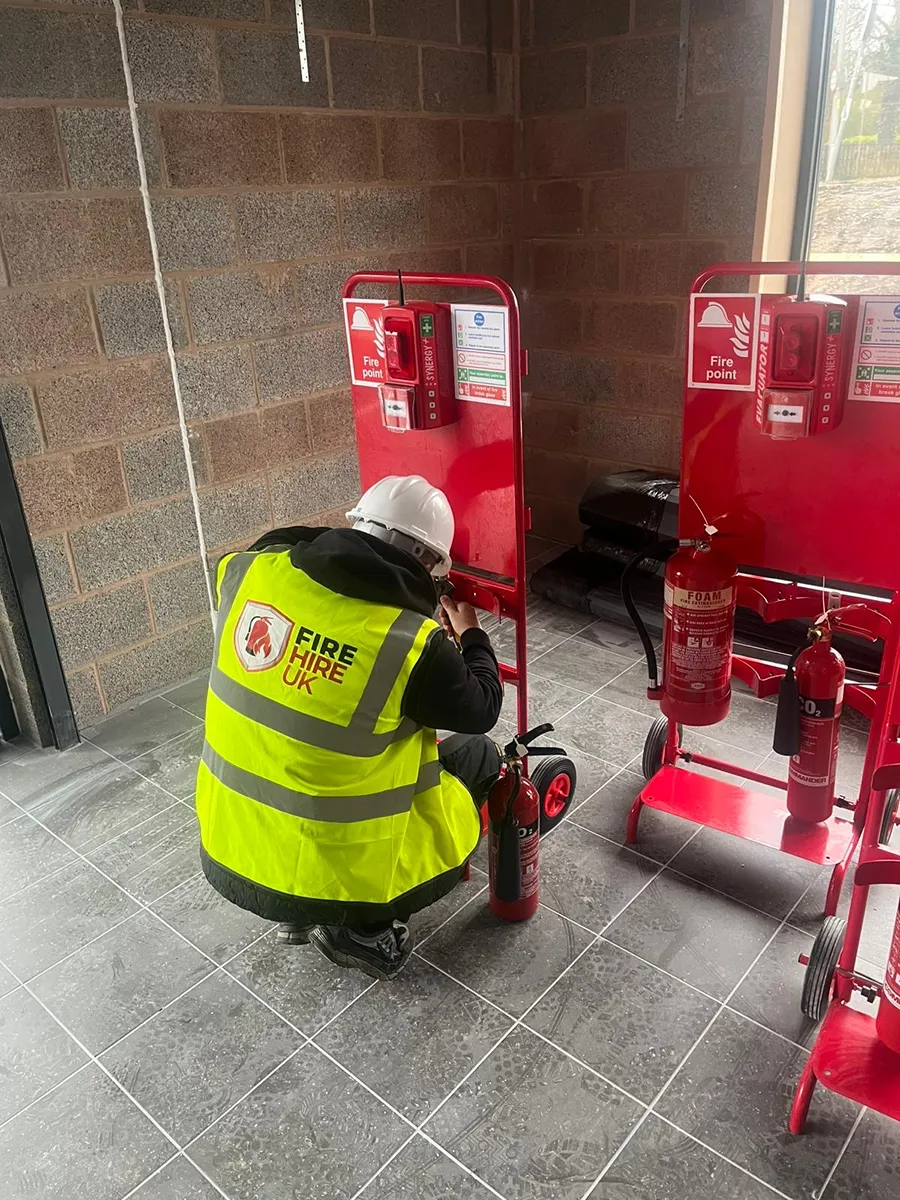
On a site that needs it, yes, because the alternative leaves part of your workforce with no warning at all. The weekly difference per unit is real, and on a small open site it is money you do not need to spend. Once the test above fails, though, you are choosing between a system that warns everyone and one that warns the people nearest the fire.
Linking also saves work as the build moves. Units move without cable runs, and extra units join the network you already have, so the alarm keeps pace with the site as HSG168 asks. How hire is priced, and what should be in a quote, is covered in our buyer's guide to temporary fire alarm hire.
What should you ask a supplier about a radio linked system?
- How is signal coverage checked at installation, and again when units move or are added? HSG168 asks for a test after installation and whenever components are added.
- What happens if a unit loses its link or its battery runs low, and who is told?
- Can the system alert a site office or a nominated person, as well as sounding on site?
- How quickly will a failed unit be replaced? A dead unit on a live site leaves an area with no alarm.
- Is servicing included for the whole hire, and who keeps the records?
If you are not sure where your site sits, send us the plan and programme. We will tell you whether standalone is enough, and at what point in the build it stops being enough. For the count itself, see how many fire points a construction site needs.